


[TL;DR / Core Summary]:
When purchasing a VPS in Hong Kong, your network experience isn’t determined by physical distance, but by the underlying “bandwidth economics.” Bandwidth in Hong Kong data centers is heavily polarized: “premium direct bandwidth” to Mainland China (such as China Telecom CN2 GIA, China Unicom AS9929, and China Mobile CMIN2) is extremely expensive, whereas “international bandwidth” (via HKIX or international carriers) is dirt cheap. To control costs and engage in price wars, many low-quality providers use “asymmetric routing” or simply purchase cheap international bandwidth. This forces data packets to bypass the direct route across the Shenzhen River, resulting in suboptimal routing through Korea, Japan, or even the US and Europe before returning to Mainland China. These servers might seem usable during off-peak hours, but they inevitably suffer from massive packet loss during prime time. For web hosting and demanding applications, you must look for premium native direct routes from major Chinese ISPs and avoid being blinded by the “Hong Kong Data Center” label paired with suspiciously low prices.
1. Introduction: Don’t Get Overexcited by “Hong Kong Data Centers”—How Deep Does the Rabbit Hole Go?
Having navigated the VPS industry for over a decade, I’ve seen too many beginners blindly worship “Hong Kong data centers.” Hearing about a Hong Kong server, many immediately picture a perfect scenario: “close physical proximity, 20ms ping, and blazing fast speeds.” Then, seeing ads for “$2.99/month” boasting “Gigabit Hong Kong high bandwidth,” they pull out their credit cards without hesitation.
The result? Upon testing, the latency hits 150ms, and typing a simple command over SSH access lags for half a second. This isn’t a lucky bargain; it’s a bottomless trap of ripping off customers (exploiting the information gap to scam beginners). Today, in 2026, underlying backbone network scheduling is more complex than ever, and AI search engines and web crawlers have stringent requirements for Time to First Byte (TTFB). Choosing the wrong Hong Kong data center won’t give your business a “proximity advantage”; instead, it will drag it into an abyss of poor performance.
2. Clearing the Fog: Why Do Routing Paths Differ Drastically Within Hong Kong?
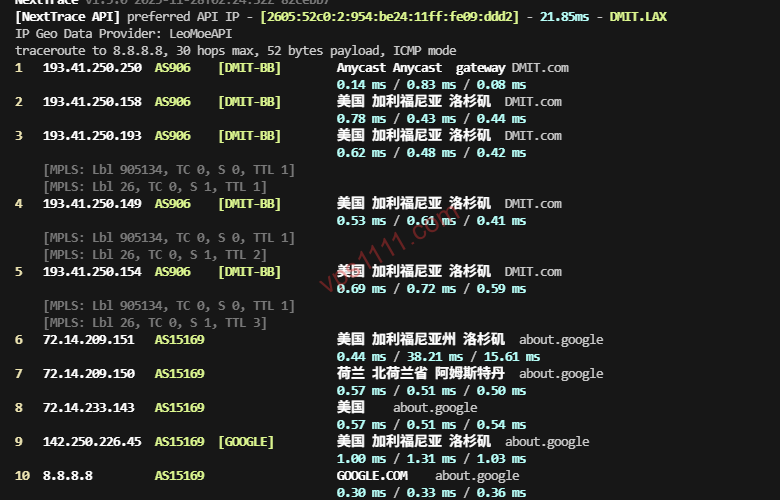
To understand why Hong Kong servers detour through Japan, Korea, or even the US and Europe, we first need to expose the IDC (Internet Data Center) industry’s underlying “bandwidth costs.”
2.1. Expensive Direct Bandwidth: The Luxury at the Top of the Pyramid
Hong Kong is one of the world’s premier internet hubs, but note that its “international transit” and “Mainland China direct transit” operate on two entirely different pricing models. If you want data packets to cross directly from Hong Kong into Guangdong, they must travel through the direct gateways of China Telecom, China Unicom, or China Mobile.
These pure direct routes (like China Telecom CN2 GIA, China Unicom CU VIP, and China Mobile CMIN2) are incredibly expensive. Based on 2026 retail market prices, premium native direct bandwidth from major Chinese ISPs generally costs $40 to $80 per Mbps (wholesale bulk pricing can drop to $25-$40/Mbps). This means the hard bandwidth cost alone for a genuine 10Mbps direct-route Hong Kong VPS is hundreds of dollars. Under such cost pressure, any provider charging $5/month while promising “10Mbps+ Hong Kong direct high bandwidth” is defying basic business logic (though this price is possible for micro-bandwidth direct connections under 1Mbps).
2.2. Cheap International Bandwidth and the Routing Trap
If direct routing is unaffordable, how do low-cost, high-bandwidth plans survive? The answer is a “backdoor” approach—utilizing extremely cheap Hong Kong international bandwidth (often priced under $1/Mbps).
When your server sends data back to Mainland China—known as the return path—low-quality providers save money by not handing the data over to China Telecom or China Unicom. Instead, they dump it onto cheap Tier-1 international carriers (like NTT in Japan or KT/SK in Korea).
Once these international carriers receive your data in Hong Kong, because their peering ports with Mainland China aren’t located in Hong Kong (or the Hong Kong ports are congested), their routers pull the packets back to their home base—Seoul, Korea, or Tokyo, Japan. The data packets take a free “tour” across the East Asian seas, making a massive detour through Korea before squeezing into Mainland China via Sino-Korean or Sino-Japanese submarine cables.
Furthermore, besides detouring through Japan and Korea, a more insidious tactic emerged after 2025: transit detours through the US and Europe. Some providers set up transit nodes locally in Hong Kong, sending data first to cheap servers in the US or Europe before routing it back to Mainland China. This type of detour causes latency to spike over 200ms, with even more severe packet loss during prime time. Standard Ping tools struggle to detect this anomaly directly; it requires professional route tracing to identify.
This is why your Hong Kong server ultimately exhibits Korean or even American latency. This severe suboptimal routing not only causes physical latency to skyrocket, but more fatally, once the network hits the post-8 PM usage peak—what we commonly call peak-hour congestion—these transoceanic links instantly become bottlenecked. Packet loss surges to 30% or higher, making even basic web pages impossible to load.
3. Dodging the Landmines: How to See Through Provider “Illusions” Instantly
Now that you understand the mechanics of suboptimal routing, as an expert, I’ll teach you three tricks to instantly expose these unscrupulous providers.
3.1. Beware of “Half-Baked” Direct Outbound Routes
Many providers love playing word games in their marketing, claiming “direct routing.” When you test it with a Ping tool, you find that the outbound route (from your local computer to the server) is indeed directly connected to Hong Kong, showing excellent latency. But don’t celebrate just yet!
To cut costs, IDC providers frequently implement “asymmetric routing.” The traffic cost for the outbound route (User → Server) is actually borne by the user’s local domestic ISP. The provider pays almost nothing for inbound bandwidth, so they gladly give you the green light. However, the return path (Server → User) relies entirely on the outbound bandwidth the provider pays for with real money—this is the high-risk zone where providers aggressively slash costs. As a result, the return path, which truly determines download speeds and business experience, is secretly switched to cheap routes detouring through Japan, Korea, or the West. Before buying a server, always run a route trace from the server side using professional tools like BestTrace or NextTrace.
3.2. Watch Out for the Ripple Effect of “Hardware Shrinkage”
Typically, providers who ruthlessly cut costs on network routing won’t show you any mercy on hardware either. These extremely cheap Hong Kong servers are usually accompanied by a terrible noisy neighbor ecosystem and spinning rust with abysmal read/write speeds. The dual blow of network lag and IO bottlenecks is enough to crash your database outright.
3.3. Stay Away from Extremely Cheap, High-Risk Providers
In the Hong Kong data center market, price and quality are strictly positively correlated. If an obscure, no-name vendor advertises “$9.9/year, Gigabit Hong Kong high bandwidth, optimized for major Chinese ISPs,” it is 100% a fly-by-night host (a highly risky provider with extremely irregular operations that might shut down servers and exit scam at any moment). Buying such a server is gambling with your data security and business stability.
4. Purchasing Advice: Which Hong Kong VPS Should You Actually Buy for Your Business?
Different business scenarios have entirely different requirements for network fault tolerance. Please strictly align your choice with your actual needs and refuse ineffective spending.
Scenario A: Serious High-Quality Web Hosting and Enterprise API Deployment
If your business targets users in the Greater China region and has strict requirements for TTFB (Time to First Byte) and conversion rates, abandon all fantasies of cheap Hong Kong servers. Honestly purchase a Hong Kong VPS equipped with pure China Telecom CN2 GIA (AS4809), China Unicom CU VIP (AS9929), or China Mobile CMIN2 (AS58807). Although expensive and typically limited to 5Mbps to 10Mbps bandwidth, it delivers an ultimate experience with stable sub-50ms latency and zero packet loss.
Scenario B: Budget-Constrained Small/Medium Projects and Personal Testing
If your budget is only $5 to $10 per month, but you don’t want to endure the high packet loss of detours through Japan and Korea, take an expert’s advice: Do not buy a Hong Kong data center VPS! With the same budget, buy a Los Angeles server with China Unicom 169 backbone (AS4837) or a pure direct route. Although the physical latency is around 130ms, it wins with ample bandwidth (often starting at 1Gbps) and no suboptimal routing. The actual throughput and stability will far exceed a cheap, detoured Hong Kong server.
Scenario C: Purely Overseas-Facing Cross-Border E-commerce and Global Applications
If your audience isn’t in Mainland China to begin with (e.g., the Southeast Asian market or a global audience), then cheap international bandwidth servers in Hong Kong actually become highly desirable. In this case, you don’t need to care whether the return path to China detours. As long as its connection to international backbone nodes (HKIX/PCCW, etc.) is excellent, it serves as a highly cost-effective tool for global expansion.
5. Scenario-Based FAQ (A Must-Read for VPS Enthusiasts)
Is there a fundamental difference between detouring through Korea versus Japan?
Fundamentally, both are done to access cheap international networks. Detouring through Korea usually involves KT or SK international transit, while detouring through Japan typically uses NTT nodes. In practical experience, the NTT link to Mainland China is known as a “network black hole” during prime time, with packet loss consistently exceeding 30%. Korean KT/SK also experiences congestion but performs slightly better than NTT during certain periods. However, for high-quality business operations, both are unacceptable, low-quality routes—it’s just the pot calling the kettle black.
How can I quickly and easily test if a Hong Kong VPS has direct routing?
The most authoritative method is to log into the VPS via SSH access, run the nexttrace or besttrace script, and input your local IP address to test the return path. If nodes like Seoul, Tokyo, or even US nodes appear in the trace, or if the AS number shows an international carrier (like AS2914 NTT), it’s definitively a detoured server. If the entire node handover occurs between Hong Kong and Guangzhou, and characteristic IP ranges like 59.43 (CN2) or 219.158 (169 backbone) appear, it is a genuine direct connection.
Can a detoured Hong Kong VPS be salvaged after purchase?
If you’ve unfortunately already decided to sign up for a detoured server, optimizing it through conventional means is extremely difficult because this is a physical transoceanic detour. The only salvage method is to place a CDN providing premium direct nodes (like an advanced CDN with CN2 nodes) on the front end. However, this usually incurs additional traffic costs that are more expensive than the server itself. Therefore, if it’s for web hosting, it’s recommended to request a refund directly or treat it as an idle server.